




Karen Collins
Key Takeaways:
- Plant-based eating is flexible. While it includes lots of plant-based foods such as vegetables, whole grains and beans, it does not necessarily mean giving up fish, poultry, meat or dairy entirely.
- Small, practical shifts make a big impact. Simple steps, like doubling vegetables in mixed dishes or swapping in whole grains for refined grains, are easy ways to build more plant foods into meals and snacks. This article outlines 20 helpful tips.
- Not all plant-based foods are equally healthy. Whole, minimally processed plant foods provide the most benefit, and including a wide variety of them supports cancer prevention and overall health.
A plant-based diet is part of the AICR 10 Cancer Prevention Recommendations. Good news: You can build a plant-based diet one step at a time with small changes that fit your lifestyle and preferences. The key to making it enjoyable? Focus on adding rather than restricting. That way, the changes feel realistic and positive, not negative or depriving. And you may find that you automatically reduce some foods that are less healthy.
What Is a Plant-Based Diet?
A plant-based diet (also called a plant-forward diet), emphasizes foods from plants, including:
- Vegetables
- Fruits
- Whole grains
- Legumes like beans, lentils and soy
- Nuts and seeds
It does not require eliminating meat or dairy entirely. Instead, it focuses on making plants the main portion of your meals, then adding animal products in smaller, less frequent portions (if at all). Think of these diets along a spectrum. Some eating patterns, such as the DASH, Mediterranean, and flexitarian diets, include some meat, poultry, fish or dairy foods. Other eating patterns, such as a vegetarian or vegan diet may omit some or all animal-based foods.
Whether they include some animal foods or are 100 percent plant-based, any of these eating patterns can meet the AICR cancer prevention recommendations. A plant-based diet offers powerful health benefits, including lower risk for cancer, heart disease and dementia.
More Plant Foods at Every Meal: Your Way
All healthy plant-based diets include a variety of nutrient-rich plant foods. Start by looking at your plate and comparing it to AICR’s New American Plate. Can you make some small shifts to your current eating habits?
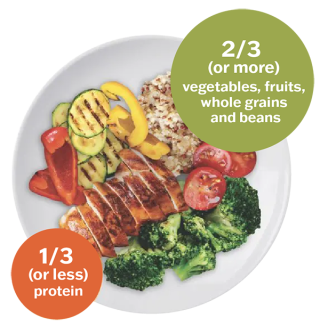 Figure 1: AICR’s New American Plate
Boost Vegetables
Some people increase vegetables by including them more often throughout the day. For example, include them in lunch or enjoy a pre-dinner vegetable snack while dinner is being prepared. Other people focus on choosing bigger portions of vegetables, swapping them in exchange for smaller servings of other foods. Maybe you want to use a combination of these strategies. You can try to:
- Double the quantity of vegetables in mixed dishes like lasagna or other pasta dishes, stews and stir fries.
- Keep frozen or canned vegetables on hand to toss into soups, chili, casseroles and pasta sauce. Try this Tex-Mex Sorghum Chili, which uses frozen corn kernels and canned tomatoes.
- Roast a tray of vegetables for delicious flavor and use them for the next three to five days. Try this recipe for Sheet Pan Roasted Vegetables and Beans.
- Dip raw vegetables in hummus or other bean dip, yogurt-based dip or guacamole.
- Make warm salads for variety. Try this Warm Kale and Beet Salad.
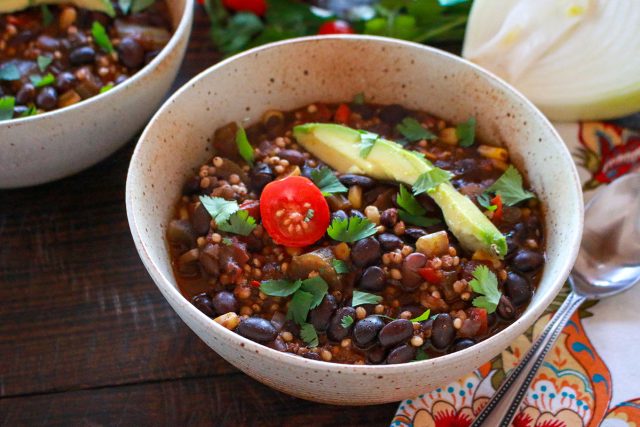 Figure 2: Tex-Mex Sorghum Chili
Savor More Fruit
Look for all the places you enjoy a little touch of sweetness throughout the day, and experiment with choosing fiber-rich fruit to get it. You can try to:
- Choose fruit for a snack or dessert sometimes. If it’s hard to walk away from your usual choice of several cookies, try a piece of fruit and just one cookie.
- Add fruit in places where you might otherwise add jelly, such as on toast or in a peanut butter sandwich.
- Add pear or apple slices in grilled cheese or turkey sandwiches.
- Instead of fruit-flavored yogurt that is high in added sugars with little actual fruit, choose plain, unsweetened yogurt and stir in fruit.
- Top off a green salad with seasonal or dried fruit. Try this Arugula Salad with Kiwi, Strawberries, and Pecans.
- Add fruit to ready-to-eat or cooked cereal.
Amp Up Whole Grains
If whole grains feel like unfamiliar territory, it is time to have fun exploring. Check out the whole-grains section of AICR’s taste-tested recipe collection. Plus, you can try to:
- Check bread and cereal ingredients, looking for a whole grain listed first.
- Add some whole-grain cereal to make a half-and-half mix with your (or your children’s) usual refined-grain cereal.
- Try whole-grain pasta with a hearty sauce, which pairs well with whole grains’ slightly nutty flavor.
- Stir quinoa, quick-cooking brown rice or leftover cooked whole grains into soup as it heats. Or try this Quinoa Risotto Primavera.
- Make whole-grain salads, like traditional tabbouleh (made with bulgur) or adapt rice salads to include brown or wild rice or farro.
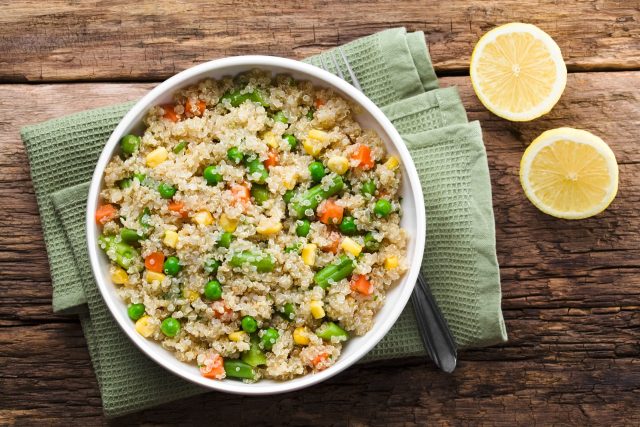 Figure 3: Quinoa Risotto Primavera
Satisfy Hunger with Legumes
Legumes include beans, chickpeas and lentils, as well as soy foods like tofu, tempeh and edamame. These are foods that can easily be swapped for all or part of the meat or poultry in a variety of dishes. It’s fast and easy with quick-cooking lentils, canned beans and ready-to-cook tofu. Have fun tweaking other ingredients, boosting garlic, onions, herbs or spices to create the flavor profile you want. You can try to:
- Use lentils or crumbled tofu to replace half or all the ground meat in chili, casseroles, meat sauce or Shepherd’s pie. Try this Lentil and Vegetable Enchilada Casserole.
- Add beans, lentils or tempeh to a grain bowl, salad or soup. Try this Mediterranean Bean Salad. Or make a legume-based soup, such as minestrone, split pea or lentil soup. Try
- Vegetable Stone Soup, which features lentils.
- Cube tofu or tempeh and add it to stir fries.
- Roast chickpeas or edamame to top salads or for a crunchy snack.
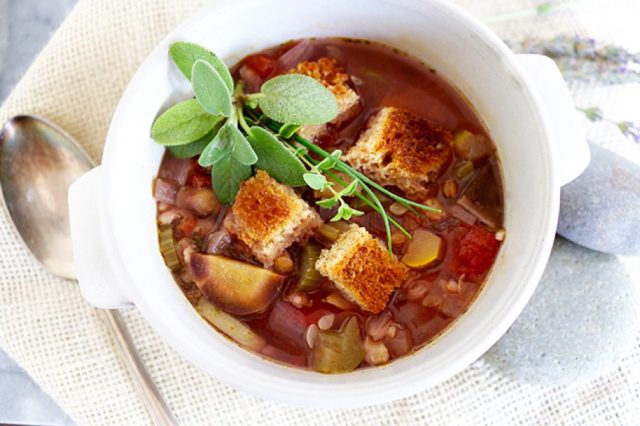 Figure 4: Vegetable Stone Soup
Polish Up Your Plant-Forward Diet
Once you get the idea of including more plant foods in meals and snacks throughout the day, you can make your plant-based diet more nutritious and fun with a few more tweaks.
Choose nutrient-rich plant foods: Do not be fooled by “health halos” on plant-based foods that are highly processed and contain a lot of fat and added sugar. Whole-plant foods, like vegetables, fruit and beans, are a more nutritious option than highly processed plant-based foods, like salty snacks and candy. Remember, cookies and chips can be made from plants (wheat and potato), but can still be high in sugar, fat and sodium. The term “plant-based” does not automatically make a food healthy.
Aim for variety: No single food has the full range of nutrients that can contribute to reducing cancer risk and better overall health. Rather than searching for the “best” cancer prevention food, aim to include a wide variety of healthy choices over the course of each week. Variety also helps keep healthy eating interesting.