




WCRF
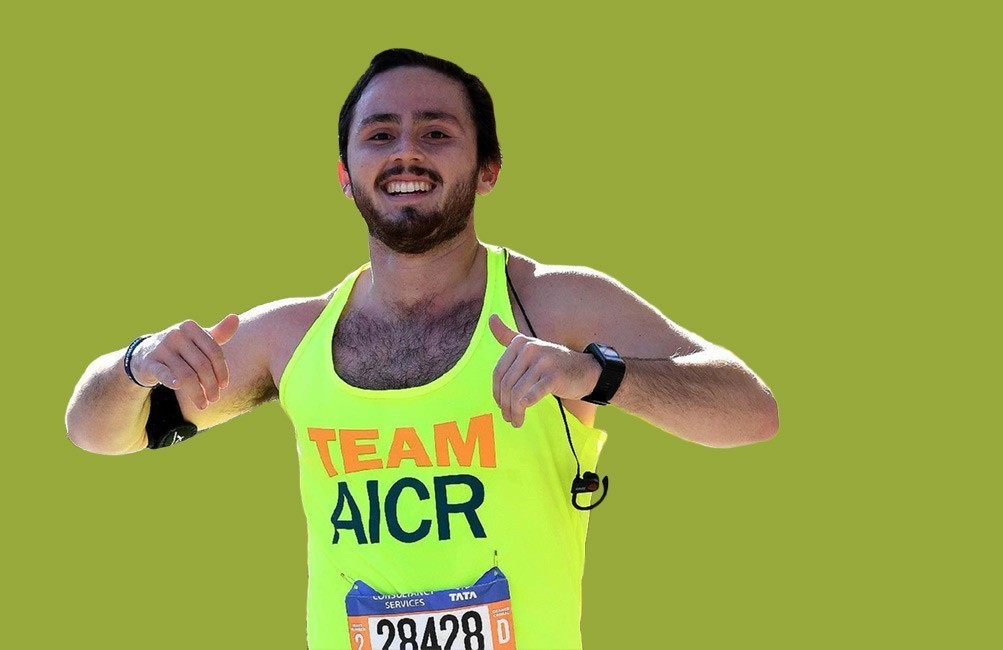
Photo above: Dr. Giota Mitrou, WCRF/AICR Executive Director of Research and Policy; Dr. Mike Coleman; Dr. Helen Croker, WCRF Assistant Director of Research and Policy
Key Takeaways:
- Dr. Mike Coleman studied cancer, obesity and the immune system during his Marilyn Gentry AICR/WCRF Fellowship.
- He found that sustained weight loss can help restore anti-tumor immune activity and slow cancer growth.
- His work helps shape new approaches that combine weight management and cancer treatment to improve patient outcomes.

Dr. Mike Coleman
Dr. Mike Coleman published 23 papers during his Marilyn Gentry AICR/WCRF Fellowship. He helped uncover how obesity weakens the immune system’s ability to fight cancer.
Dr. Coleman’s research now sits at the crossroads of cancer, metabolism and the immune system. When he first began his Marilyn Gentry Fellowship at the University of North Carolina at Chapel Hill in 2022, the path ahead was far less defined.
“My work focuses on the idea that the body’s natural immune system is really good at controlling cancer most of the time,” says Dr. Coleman. “By the time someone gets a cancer diagnosis, it usually means that their immune system has been tricked in some way by cancer.”
Dr. Coleman worked under the guidance of Professor Steve Hursting, a global expert in the field of nutrition and cancer. The fellowship gave Dr. Coleman the freedom and creativity to explore the question: how does obesity affect the immune system’s ability to fight cancer?
From Early Inspiration to Impact
Dr. Coleman’s interest in science began early. Growing up on a farm, he found himself drawn to problem solving. He wanted to understand how diseases develop at a molecular level. That curiosity led him to study biochemistry. Then his PhD focused on how mitochondria influence the spread of breast cancer.
“I wanted to deep dive inside the cell and ask what’s going on at this level?” says Dr. Coleman. During his PhD, he found strong links between obesity and cancer risk. This would later guide his fellowship research. At the same time, he decided to expand his research from looking at a single cell towards looking at the whole body.
Looking at Cell Therapy
By the time Dr. Coleman started the fellowship, it was clear that the immune system was going to be central to his work. He began to study CAR T-cell therapy.
What is CAR T-cell therapy?
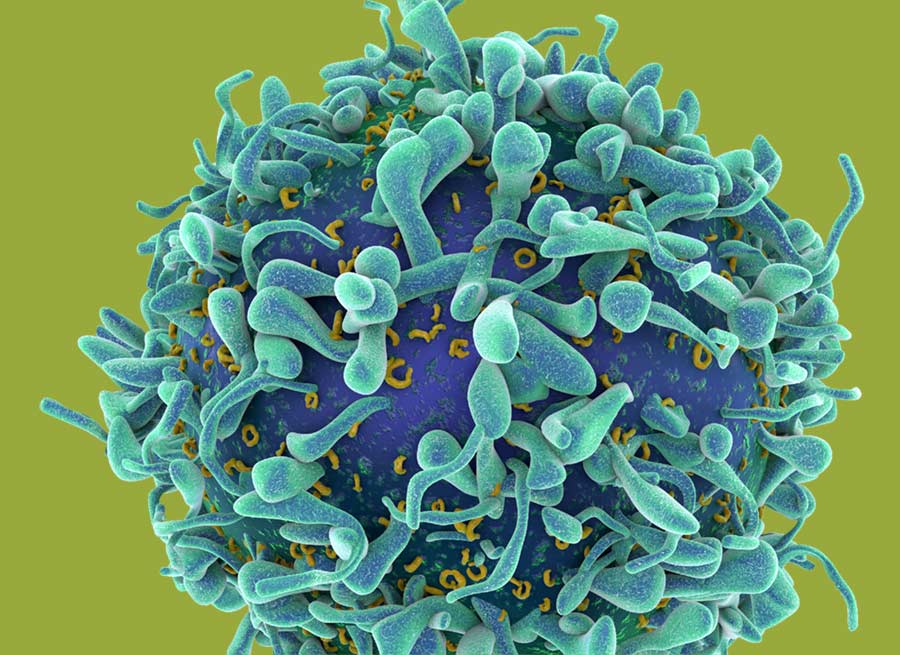
CAR T-cell therapy is a form of immunotherapy. It is also called adoptive cell therapy. It changes a patient’s own immune cells to recognize and destroy cancer cells.
Dr. Coleman explains how it works:
- We take blood from the patient.
- We re-engineer a certain set of immune cells to target cancer cells.
- The new cells are re-introduced to the patient.
- The re-engineered cells are designed to control the cancer growth.
“I like to think of it as putting them through a cancer-killing boot camp. When they re-enter the body, they are ready to attack tumor cells,” says Dr. Coleman.
CAR-T cell therapy works very well with blood cancers. It does not work as well for solid tumors, such as breast cancer or colon cancer. Dr. Coleman wanted to explore how obesity interacts with that.
He tested his hypothesis on triple negative breast cancer cells. His research showed that obesity-related inflammation can impair the ability of CAR T-cells to destroy tumors. This dampens their anti-tumor effects.
His findings showed that obesity is an important factor that affects cancer immunotherapy outcomes. About 40 percent of Americans have obesity. Dr. Coleman believes that understanding the role of obesity in immunotherapy response will help improve future cancer treatments.
Can Weight Loss Affect Tumor Growth?
Dr. Coleman aims to better understand the impact of obesity on the immune system. He wanted to see whether weight loss may help restore immune function.
Looking back at cancer incidence in women who have had bariatric surgery, there is a 30-50 percent reduction in obesity-driven cancer rates. Dr. Coleman wanted to understand whether there is something unique to bariatric surgery that is driving the kind of weight loss that sees these special benefits.
Using mouse models, his team compared different weight loss methods and examined their effects on tumor growth. They looked at bariatric surgery and dietary changes.
They found that the extent of weight loss, no matter how a patient got there, helped predict how protective an intervention was going to be.
They found that all forms of sustained weight loss helped restore anti-tumor immune activity. Calorie restriction had the strongest protective effects. The study showed that the amount of weight and fat lost mattered more than the specific method used. Weight loss overall was the major driver of improved immune function and reduced cancer progression.
“It really set up this idea for me that losing weight has a potent effect to fire the immune system up to control tumor growth,” says Dr. Coleman. “And now we know a lot more about how the immune system is dampened by obesity and why weight loss may be protective.”
A Changing Landscape
These findings are even more relevant as new weight loss medications (such as GLP-1s like Ozempic) transform treatment.
“In the past, sustained weight loss at this scale was mostly limited to bariatric surgery,” says Dr. Coleman. “But now we are in an era where GLP-1s are widely used and well tolerated.”
Using GLP-1s opens new possibilities for cancer care. A recent publication found that GLP-1 use was significantly associated with improved survival and reduced recurrence among breast cancer patients with obesity.
Researchers can now begin to explore how weight loss interventions might be combined with immunotherapies to improve outcomes.
“This means we’re entering an era where you can now imagine a case of standard oncology treatment where we begin to ask: how do we incorporate GLP-1s into that care?” says Dr. Coleman. Researchers will look at how these drugs be used to protect immune function or work with therapies to promote immune response.
Advice for Future Scientists
For his next research question, Dr. Coleman is looking at CAR T-cell therapies as an area of huge growth for solid tumor oncology.
He wants to know if there is a way to customize CAR T-cell therapy to be responsive to body weight or composition. “The overall goal is to overcome obesity-driven resistance by customizing the therapy or integrating interventions like GLP-1 drugs to protect immune cell function,” says Dr. Coleman.
For over 25 years, the Marilyn Gentry Fellowship has supported emerging leaders in the field of diet, nutrition and cancer. Dr. Coleman says that the fellowship gave him the security to chase the questions that sparked curiosity and allowed him to be a little more fearless.
Dr. Coleman encourages early career researchers to think outside of their own silos. He says that the days of one lab solving a problem in isolation is waning. Projects are now executed in bigger, broader teams.
“Dipping a toe in the other research pools gives you a lot back and it will naturally create a network of people you could collaborate with in the future,” says Dr. Coleman.
By the end of his Marilyn Gentry Fellowship, Dr. Coleman:
- Published 23 papers.
- Helped strengthen the idea that obesity directly suppresses the body’s ability to fight cancer.
- Showed that restoring metabolic health could improve responses to future cancer treatments.
“This fellowship didn’t just support my research,” says Dr. Coleman. “It helped to shape the future direction of my career.”
Dr. Coleman’s current work at UNC Chapel Hill continues to explore how weight management can be used to revitalize immune response in cancer.