



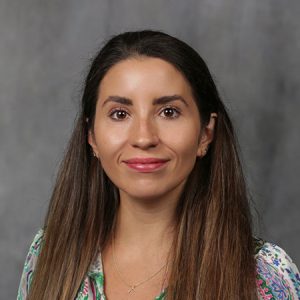
Dr. Fiona Malcomson, PhD, PGDip, MRes, BSc (Hons) Malcomson
Key Takeaways:
- AICR Scientific Advisor Dr. Fiona Malcomson highlights cutting-edge research from the recent American College of Sports Medicine Annual Meeting.
- Exercise is one of the most powerful lifestyle tools for cancer prevention and survivorship.
- Researchers are looking at more personalized exercise advice for cancer survivors, based on a person’s cancer type, treatment history and individual needs.
Physical activity remains one of the most important things people can do to support their health before, during and after cancer. That’s according to the experts gathered for the American College of Sports Medicine (ACSM) Annual Meeting in Salt Lake City, Utah, from May 26–29, 2026.
This year’s meeting covered many topics including:
- Exercise at different stages of life
- Women’s health and exercise
- Nutrition for exercise
- Exercise technology
- Sports programs for children and teens
Importantly for AICR, there were many sessions on cancer prevention and survivorship. Researchers shared new findings on how exercise may help reduce cancer risk and support cancer survivors during and after treatment.
Researchers are now asking practical questions about how to make exercise support available to cancer survivors.
Exercise as Part of Cancer Care
The thought-provoking session “Exercise and Cancer: From Nice to Have to Need to Know.” showed how guidance for cancer survivors has evolved over recent decades.
For example, before the 1990s, women with breast cancer were advised complete rest following surgery. However, since the 2010s, more healthcare providers see exercise as an important part of cancer care.
Research has shown that physical activity can help:
- Manage treatment side effects
- Improve strength
- Improve fitness
- Reduce fatigue
- Improve quality of life
- Maintain muscle
- Support heart health
We now also better understand how exercise exerts these health benefits. Exercise can help:
- Support the immune system
- Lower inflammation
- Improve insulin sensitivity
- Support the bacteria that live in the gut
Personalized Exercise Plans for Cancer Survivors
Another strong message from this year’s meeting was that exercise programs should be personalized. This was the theme in the sessions “From Rehabilitation to Exercise: How to Connect Oncology Patients to the Right Service at the Right Time throughout Care” and “Strength in Motion: Integrating Technology and Science to Advance Exercise Rehabilitation across the Cancer Care Continuum.”
Through a series of real-world case examples, speakers showed that exercise needs to be adapted for people with different needs. Highlighted examples were teen cancer survivors returning to competitive sports and adults with metastatic bone disease who want to remain active safely.
There is no “one size fits all” exercise program. Instead, a program needs to be safe and realistic and reflect:
- Cancer type
- Treatments
- Symptoms
- Physical function
- Personal goals
- Preferences
Technology Can Help
Researchers talked about the growing use of technology to support cancer prevention and survivorship.
During the session “Algorithms in Action: Technology-Enabled Lifestyle Interventions in Cancer Care,” researchers discussed how digital tools can be used to support people affected by cancer.
These tools may help researchers combine data from multiple sources, including wearable devices, health records and lifestyle data. They may also help identify people who could benefit most from more personal support.
Researchers talked about how technology can be used to deliver online lifestyle programs and personal guidance. The goal is not to replace healthcare professionals. Instead, the goal is for technology to support the healthcare team and ensure that more people get the right support at the right time.
Support for Older Cancer Survivors
Developing new exercise guidelines for older adult cancer survivors is vital as there are many older adult survivors and most do not meet physical activity guidelines.
As people age, they may find changes in:
- Strength
- Balance
- Mobility
- Overall physical function
A cancer diagnosis or treatment may make these conditions worse. That makes it even more important to provide the right support.
In the session “New Exercise Guidelines for Older Cancer Survivors: Development, Dissemination and Implementation into the Digital World” speakers said that exercise may help older adults:
- Maintain physical function
- Stay more independent
- Improve quality of life
The speakers said it was vital for exercise programs to be practical, accessible and relevant to the daily lives of older survivors. Digital tools may make it easier for older adults to access exercise support, no matter where they live or whether they can attend in-person programs.
Turning Research into Practice
Access to tools and support was a recurring theme at the meeting. One challenge is ensuring that people can access the right support when they need it. This issue was highlighted during the sessions “Bringing Cancer Exercise Trials to the Clinic: Transformative Findings from Colon, Lung and Pancreatic Cancer” and “From Rehabilitation to Exercise: How to Connect Oncology Patients to the Right Service at the Right Time Throughout Care.”
Speakers talked about delivering programs more broadly in healthcare systems and community settings. They said that cancer survivors may benefit from different types of support at different stages of care, including rehab services and structured exercise programs. Some presenters shared tools designed to help healthcare providers identify patients’ needs and connect them with the right services.
Other Interesting TopicsOne session looked at whether a healthy diet can offset the health risks of spending too much time sitting. Drawing on evidence from large studies, speakers compared the health effects of diet and exercise, both separately and together. The take home message was that ‘food is medicine, but exercise is stronger medicine.
Another session looked at exercise when taking GLP-1 medicines such as Ozempic. The speakers talked about important points to consider when designing exercise programs for people taking these medications, such as maintaining muscle mass and the potential side effects of GLP-1s.
Meeting with AICR Grantees
I had the chance to meet with past and present AICR grant holders.
- Dr. Kristin Campbell is looking at how physical activity can help to maintain muscle and reduce body fat to improve survival in people with colorectal cancer.
- Dr. Kathryn Schmitz used her AICR grant explore a virtual digital assistant to deliver an exercise and nutrition support program to women with breast cancer.
- Dr. Forrest Baker is looking at how exercise may boost the effectiveness of immune-based treatments for multiple myeloma and improve outcomes for patients with hard-to-treat disease.
- Dr Neil Iyengar is testing a digital lifestyle program to reduce body fat while maintaining muscle mass in women with breast cancer.
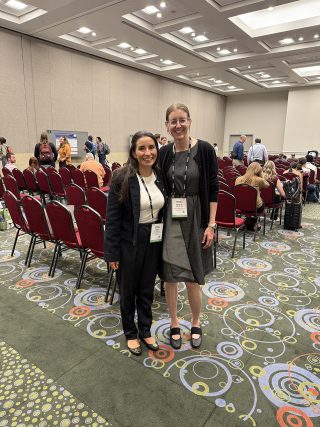
Dr. Malcomson and Dr. Campbell
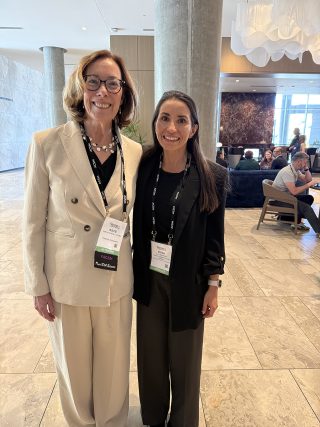
Dr. Schmitz and Dr. Malcomson
Take Home Message
Physical activity is one of the best ways to support health before, during and after cancer. A takeaway message from this year’s ACSM Annual Meeting was the need to personalize exercise programs. Researchers talked about creating programs that meet a person’s needs, regardless of age, access or ability.
Activity can improve both physical and mental health. The goal is now to make exercise programs easier to access, more personalized and a regular part of cancer care.