


Prostate Cancer
Learn About Prostate Cancer

HOW PREVENTABLE IS PROSTATE CANCER?
Though many risk factors for prostate cancer lie outside of our control (see below), there is strong and consistent evidence that diet is one way men can reduce their risk. AICR estimates that approximately 1 in 10 cases of prostate cancer (eleven percent) are related to diet.
This means that nearly 26,250 cases every year could be prevented through eating more healthfully.
HOW YOU CAN HELP
Donate Now to Support Cancer Research and Education
STAY INFORMED
Register to receive updates on AICR Research
WHAT ARE PROSTATE CANCER'S
MAJOR RISK FACTORS?
| Age: The older you are, the greater your risk. The overwhelming majority (97%) of prostate cancers occur in men 50 and older. |
Ethnicity: Prostate cancer is most common in North America and northern Europe. African-American men have the highest prostate cancer incidence rates in the world. |
| Family History: The National Cancer Institute estimates that between 5 and 10 percent of prostate cancers are the result of a strong genetic predisposition. |
Diet: AICR’s expert report concluded that diets high in tomatoes, watermelon and other lycopene-containing foods are protective against prostate cancer, as are diets high in selenium. Diets high in calcium are associated with increased risk for prostate cancer. |
HOW COMMON IS PROSTATE CANCER?
Prostate cancer is the most common cancer diagnosed in men (apart from skin cancer). Twenty-eight percent of the cancers diagnosed in men each year are prostate cancers.
Nearly 239,000 men are diagnosed with prostate cancer in the U.S. every year. The disease claims almost 30,000 U.S. lives annually.
RELATED ARTICLES
Focus on the Risk Factors You Control

A Menu for
Prostate Cancer Prevention
Learn about AICR’s simple, visual, award-winning approach to meal planning that helps you lower your cancer risk – and your weight.
Foods That Fight Cancer™AICR’s new web resource keeps you up-to-date about the latest research on foods that belong at the center of your New American Plate.
Today, over 90 percent of prostate cancers are diagnosed at an early stage. Earlier detection, combined with more effective treatment, has made prostate cancer more survivable than ever.
Two screenings for prostate cancer are the prostate-specific antigen (PSA) blood test and a digital rectal examination (DRE).
These tests can diagnose both the aggressive, advanced stages of prostate cancer and cancer that is so slow-growing it may not require treatment. Some experts advise against routine screenings to avoid “overtreatment” of cancers that are not life-threatening.
Be sure to discuss your screening options with your doctor.
The Factors You Control
A healthy overall lifestyle (which includes a plant-based diet, regular physical activity, and maintaining a healthy weight) lowers risk for many cancers and other chronic diseases like heart disease and diabetes.
When it comes to prostate cancer specifically, ongoing research suggests that diets rich in foods containing lycopene – tomatoes and tomato products (paste, sauce, juice) as well as red or pink grapefruit, watermelon and guava – are linked to a reduced risk of prostate cancer.
Diets high in selenium have also been associated with lower risk for prostate cancer. (Note, however, that the largest-ever prostate cancer prevention trial (SELECT), found that supplements of selenium did not reduce prostate cancer risk. AICR recommends relying on the whole diet, not dietary supplements, for cancer prevention.)
Diets high in calcium have been associated with increased risk for prostate cancer. (For bone health, health experts recommend that men get 1000 mg/day of calcium until age 70, and 1200 mg/day thereafter). Avoid taking supplements that will give you more calcium than you need.
What the Research Shows
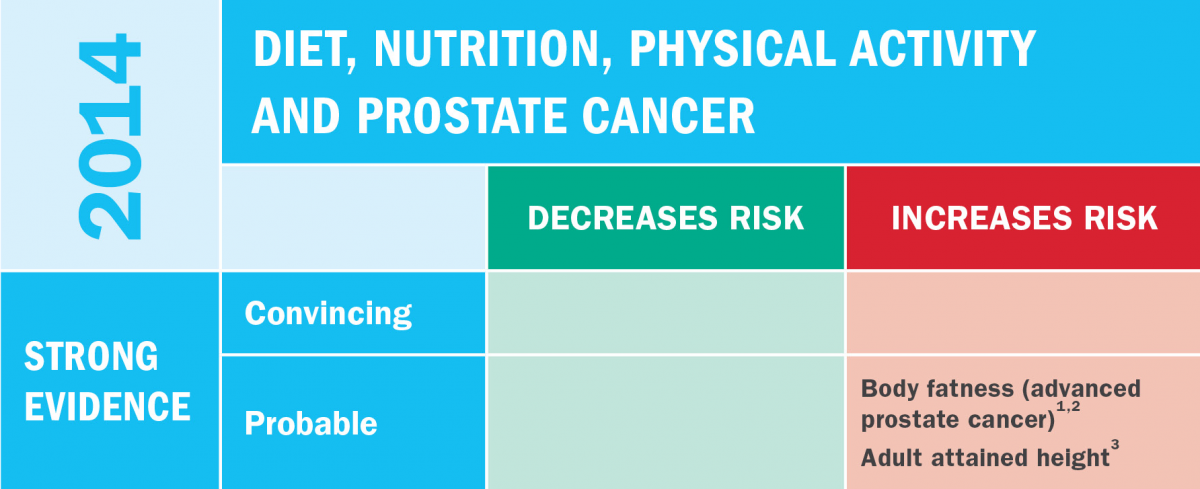
Food, Nutrition, Physical Activity, and Cancer Of The Prostate* | ||
|---|---|---|
|
Strength of Current Evidence |
Decreases Risk |
Increases Risk |
| PROBABLE Effect on Risk |
Foods containing lycopene |
Diets high in calcium*** |
| NO SUBSTANTIAL Effect on Risk: Beta-carotene | ||
*Source: Food, Nutrition, Physical Activity, and the Prevention of Cancer: a Global Perspective
**The expert report examined studies involving both foods containing selenium and selenium supplements.
***The expert report examined studies involving foods that naturally contain calcium and those fortified with calcium. Note, however, that increased prostate cancer risk occurred at high calcium intakes (1,500 mg/day or more). Men in the U.S. have an average intake of 800 to 1150 mg of dietary calcium per day. AICR's expert report also found that diets high in calcium decrease risk for colorectal cancer.
What’s the Link?
Diets High in Lycopene Decrease Prostate Cancer Risk
- Lycopene is a carotenoid with strong antioxidant activity. Research suggests it reduces LDL cholesterol, improves immune function and reduces inflammation.
- Lycopene is best absorbed from tomatoes after they are cooked or pureed.
Diets High in Selenium Decrease Prostate Cancer Risk
- Selenium is involved in several potentially protective biological processes and exhibits anti-inflammatory, antioxidant properties.
- Selenium is involved with testosterone production, which regulates prostate growth.
Diets High in Calcium Increase Prostate Cancer Risk
- In lab studies, high calcium intake increases cell proliferation in the prostate.
Beta-carotene Has No Substantial Effect on Prostate Cancer Risk
- The AICR/WCRF expert report concluded there is strong and consistent evidence that beta-carotene in food or in supplement form is neither harmful nor beneficial in regard to prostate cancer.
AICR-Supported Studies
LOOK FORWARD WITH HOPE

Today your chances of recovering from prostate cancer and returning to a full and active life have never been better.
Over the past 25 years, the 5-year survival rate for all stages of prostate cancer combined has increased from 68% to nearly 100%.
Throughout your treatment you will face many everyday questions. And because there is evidence that obesity increases prostate cancer mortality, maintaining a healthy weight once treatment is over will be more important than ever.
AICR can help.
AICR’s CancerResource: A Program for Those Living with Cancer is a free kit of information specifically for the newly diagnosed cancer patient.
See below for selections from AICR's CancerResource. Or read the complete CancerResource flipping book online.
BEFORE TREATMENT
DURING TREATMENT
- Questions to Ask Your Oncologist About Your Treatment Worksheet
- Questions to Ask About Nutrition During Treatment
- Evidence-based advice on managing nutrition-related side effects of treatment
- Staying active during treatment
AFTER TREATMENT
- AICR’s Recommendations for Cancer Prevention
- Healthy or Harmful? Frequently Asked Questions about Life After Cancer
More AICR Materials for Prostate Cancer Survivors
In-depth brochures on cancer survivorship; read online or order a free copy.
Join the Fight Against Prostate Cancer

Nearly 238,600 new cases of prostate cancer occur annually but few Americans realize that making simple, everyday changes to what we eat and how much we move could prevent approximately 1 out of every 10 cases of prostate cancer. Your support for AICR's cancer research, survivorship, and education programs will help us get one step closer to preventing prostate cancer and saving lives.
Donate Today!
Your gift will help fund emerging research on prostate cancer and other cancers and improve the quality of health for prostate cancer patients and survivors.
Honor Someone Facing Prostate Cancer
Make a gift in honor of a loved one. Your gift will help fund research and survivorship programs for those with prostate cancer and other cancers for years to come.
Give in Memory of a Loved One
Make a gift in memory of a loved one. Your gift will help fund research and survivorship programs for those with prostate cancer and other cancers for years to come.
Do You Have a Question? Ask the Expert!
We’ve compiled a list of some of the most common questions we receive in our FAQ below. Have a question about diet and food and cancer prevention? Ask your question using this form. We will post some of the answers to the questions we receive that have the most benefit to the most people.
Ask Your Question
Frequently Asked Questions (FAQ)