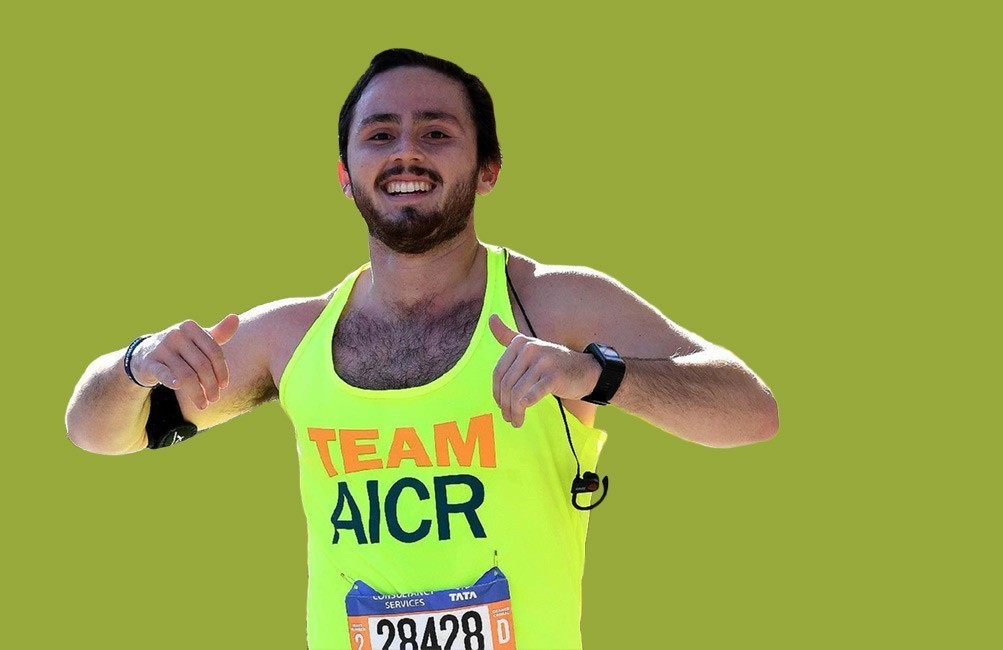



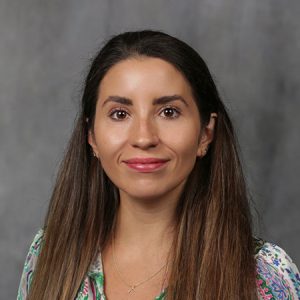
Dr. Fiona Malcomson, PhD, PGDip, MRes, BSc (Hons) Malcomson
Key Takeaways:
- AICR Scientific Advisor Dr. Fiona Malcomson attended the American Society for Clinical Oncology Annual Meeting and shares her insights in this blog.
- Some conference sessions focused on lifestyle medicine, which includes healthy habits such as staying active, eating well and managing weight. These are key to survivorship care and can help people live better after a cancer diagnosis.
- Conference sessions also covered GLP-1 drugs, advances in cancer treatment and global cancer care.
Cancer experts from around the world gathered at the American Society of Clinical Oncology (ASCO) Annual Meeting in Chicago from June 4-8, 2026. They shared new research and discussed the future of cancer care.
The meeting highlighted an important message: cancer care is not just about treating tumors. Researchers are paying more attention to prevention, quality of life and helping people stay healthy after cancer treatment ends. Here are some conference highlights.
Lifestyle Medicine is Vital
Today, more people are living longer after a cancer diagnosis. They may continue to face challenges after treatment ends. Despite recommendations, many cancer survivors are not meeting healthy lifestyle guidelines.
During the session Optimizing Breast Cancer Survivorship, experts discussed several common challenges for cancer survivors, including:
- Having a healthy lifestyle
- Managing weight gain
- Being physically active
- Coping with fear that cancer may come back
They noted that many women gain weight during or after breast cancer treatment from side effects or from less exercise. Healthy eating, regular exercise, support from healthcare professionals and sometimes medication can help with weight control.
Presenters shared resources for breast cancer survivors, and AICR resources were highlighted.
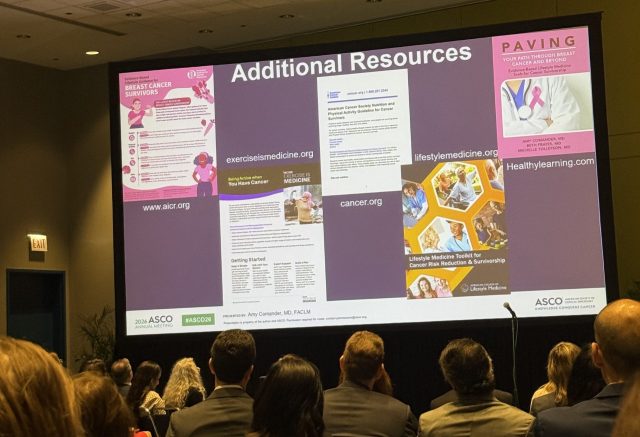
Lifestyle medicine is a medical specialty that uses lifestyle habits such as nutrition, exercise and stress management to prevent or treat chronic diseases. Download AICR’s Evidence-Based Lifestyle Guidance for Breast Cancer Survivors infographic here. It is one of the documents that was highlighted at meeting (see photo) since it shares nutrition and exercise advice for breast cancer survivors.
Mental health is also an important part of recovery. Many survivors worry about cancer returning. You may feel anxious before follow-up appointments or when they notice new symptoms. Talking with your cancer care team can help, and patients can be referred to specialist support services if they need extra help managing anxiety.
GLP-1 Weight Loss Drugs and Cancer
Several studies at ASCO looked at links between GLP-1 drugs (such as Ozempic) and cancer. Scientists are looking into whether these drugs may help reduce cancer risk by helping people lose weight and improve metabolic health. Researchers examined the risk of blood, lung and breast cancers in people using GLP-1s. Other researchers looked at survival and treatment side effects in cancer survivors using GLP-1s.
These studies are encouraging. But we still need more long-term data. Right now, most studies are database studies using ‘real-world data’. These can show patterns, but they cannot prove that GLP-1 drugs directly increase or decrease cancer risk.
Clinical trials designed to study cancer outcomes would help researchers better understand whether GLP-1s have a direct effect on cancer risk. These effects could be due to the drugs themselves or result from the weight loss they produce. More research is needed on side effects of GLP-1s, such as joint pain and bone health. This is relevant for women with breast cancer.
Environment and Cancer
Another relevant session I attended at ASCO looked at the role of the environment in cancer risk, cancer outcomes and access to care.
Experts discussed how factors around us can influence health, including:
- Air pollution
- Workplace exposures
- Extreme weather events
- Climate change
- Access to healthy food
- Access to exercise
The speakers talked about how climate change may affect people living with cancer. Extreme heat, wildfires, flooding and other weather events can disrupt cancer care and make it harder for patients to access treatment.
While some environmental risks are difficult to control, public health policies can make a difference. Efforts to improve air quality, reduce harmful exposures and create healthier communities can help lower cancer risk and improve health for everyone.
Who Will Care for Future Cancer Patients?
Another thought-provoking session at ASCO was based on a new report, ‘Cancer Workforce- A Global Crisis’. The report showed that cancer cases may increase globally in the coming years, but healthcare shortages may be an issue. The session focused on the question: who will care for the growing number of people diagnosed with cancer in the future?
The shortages include:
- Doctors who treat cancer
- Cancer nurses
- Surgeons
- Pathologists (who help diagnose cancer)
- Other healthcare professionals who support patient care
New cancer treatments can only help patients if there are enough trained professionals to deliver them. Improving cancer outcomes is about making sure everyone has access to the care they need. Experts said that solving the problem of staff shortages will require:
- Training more healthcare workers
- Expanding the role of nurses
- Using digital tools
- Building stronger healthcare systems
- Creating partnerships between governments, healthcare organizations and community groups
Cancer Treatment Advances
ASCO featured exciting advances in cancer treatment. Researchers shared study results that could change how certain cancers will be treated in the future.
One of the most talked-about studies was the RASolute 302 trial in advanced pancreatic cancer. It tested a new targeted treatment called daraxonrasib. The treatment works by blocking signals linked to common genetic changes that drive pancreatic cancer growth. This treatment may help patients live longer and delay disease progression. The treatment also appeared to have fewer side effects. These results offer new hope for a cancer that has historically been very difficult to treat.
Other studies shared advances in hot topics that AICR has been focusing on, such as:
These treatments aim to match patients with therapies that are most likely to work for their specific type of cancer.
These breakthroughs remind us how quickly cancer research is moving forward. New treatments are helping more people live longer after a cancer diagnosis. At the same time, many experts at ASCO said that treatment is only one part of the picture. It is also important to focus on:
- Prevention
- Early detection
- Healthy lifestyles
- Survivorship
Meeting with AICR and WCRF International Grantees
At ASCO, I met with past and present AICR grant holders and members of WCRF International. Some were presenting their research, including:
- Dr. Jennifer Ligibel is looking at the impact of menopause on weight gain in women with breast cancer.
- Dr. Vered Stearns and Jenni Sheng are testing the effects of a weight loss medication in women with early-stage breast cancer who have the most difficulty losing weight.
- Dr. Suzanna Zick is studying whether a healthy whole-food diet can help reduce fatigue in people with lymphoma. The diet includes fruits, vegetables, nuts, seeds, whole grains, and seafood.
- Dr. Kalijn Bol is looking at how fiber affects the bacteria that live in our guts and in response to immunotherapy in patients with metastatic melanoma.
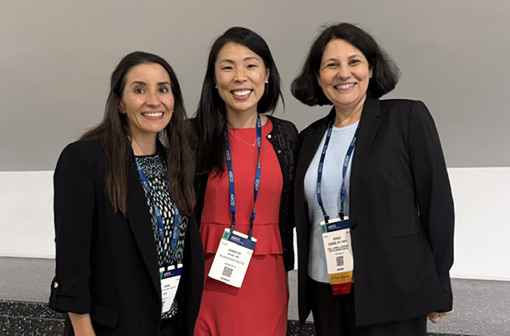
Dr. Malcomson, Dr. Sheng and Dr. Stearns