







Rose Hoffman
Two years ago, I interviewed a few of my colleagues here at AICR about their experience with using a standing desk. We were using the “sit-stand” variety that allows you to adjust the height but I didn’t get one then because of my desk setup.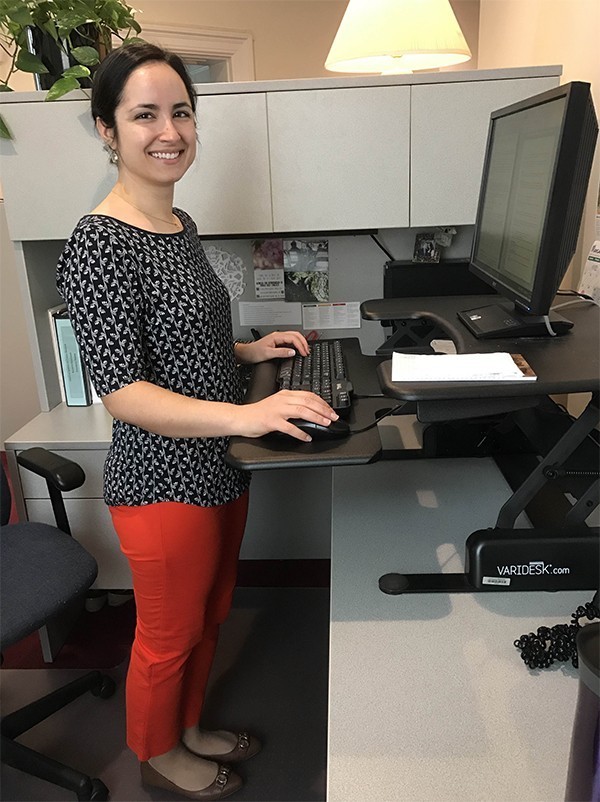
Last summer, though, I came back to the office from a week of being out and I noticed that my hips were achy after sitting for a few hours. I tried a few DIY remedies — using a footstool, walking about frequently,– nothing helped.
Then the offer of a standing desk came around again. This time, I switched up my computer setup to make it work and I’m so glad I did! Now that I’ve used the standing desk for over eight months, I want to share. For anyone thinking of getting one, here’s what I found:
The Pros:
- Comfort: Right off the bat, I noticed that varying my time between sitting and standing alleviated the aches that come from the pressure of staying in one position for a long time.
- Improved focus: I found that when I stand, I am able to leave all the distractions of my desk and focus on one project at a time. I have also started only checking e-mail when I am sitting to help balance my time.
- Collaboration: It is much easier for two people to look at a computer monitor when it is raised up and both parties can stand close to see the screen. Gone are the days of co-workers crouching down awkwardly to examine a spreadsheet or attempting to pull up a chair to my desk which is really only meant for one office chair.
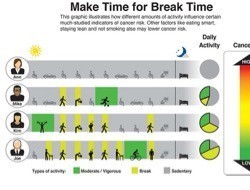
Research is investigating how standing and moving in small ways plays a role in health and lower cancer risk.
Currently, AICR research shows 30 minutes of moderate activity daily lowers risk of several cancers.
Things to think about
- Desk space: The standing desk I have does take up a substantial amount of real estate on my desk. To make things work, I had to move my monitor so that it was no longer located below my hutch, and slide my desk away from the wall to make room for it.
- Standing desk space: When I raise the desk to stand, it doesn’t hold lots of materials. That being said, however, it is large enough to hold a few documents, my phone, and a cup of water.
Conclusion: If you have the space, and the resources, I highly recommend a sit-stand desk.
My use of the standing desk comes in waves. There are days when I stand more often than I sit and I use the down time as a break. Other times, I sit the majority of the time and when I see a dip in my productivity, I stand up to re-energize myself.
When I first started, I used an application on my desktop to remind me of when to sit and stand, but I no longer use it as I find that listening to my body, or just going with the flow of my work needs, is enough to keep me using the desk to regularly stand.
I know there are lots of standing desk to choose from, including options where the entire workspace comes up with you. If you’ve used any of them – or any alternative desks — please share.