




Alice RD
The new Dietary Guidelines for Americans are out and they take a step in the right direction to help you make choices to lower your risk for cancer. Two key pieces of advice–eat a healthy diet that includes plenty of plant foods and keep sugary foods and drinks to a minimum. And that could mean fewer cases of cancer associated with poor diet and obesity.![2015 Dietary Guidelines_Draft 2[1]](http://www.aicr.org/wp-content/uploads/2016/01/2015-Dietary-Guidelines_Draft-21-683x1024.jpg)
You can put these into practice with our New American Plate model – filling at least 2/3 of your plate with vegetables, legumes, whole grains and fruit, and 1/3 or less with fish, poultry, meat and dairy.
The guidelines also recommend keeping your added sugar to 10 percent or less of your total calories. As we wrote earlier about the nutrition label and sugar, if you follow a 2000 calorie diet, you could have about one cup of fruit yogurt and one small dark chocolate bar. That’s because foods with high amounts of added sugar contribute to overweight and obesity, a cause of 10 cancers, including colorectal, postmenopausal breast and kidney.
Unfortunately, the Dietary Guidelines does not reflect the evidence-based recommendation from the independent expert committee to advise Americans to limit red and processed meat. It is disappointing that industry lobbying efforts succeeded in preventing the clear and simple message that these increase risk for colorectal cancer. AICR research has shown that red and processed meats are convincingly linked to colorectal cancer, and the World Health Organization has also recently established that link. Here’s our recommendation: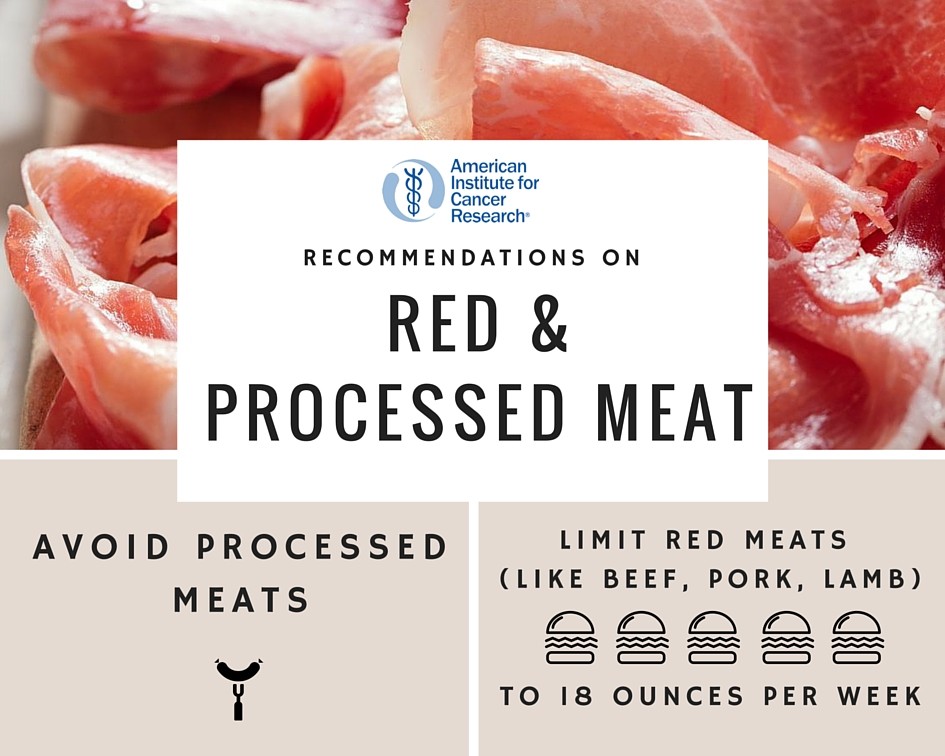
These guidelines have a major impact in helping kids and older adults have access to a healthy diet. Food choices for school lunches and breakfasts are based on the dietary guidelines, so the limit on added sugar will be a positive step in helping children choose healthier foods. Meal programs in senior centers are also informed by the Dietary Guidelines, offering an opportunity for older adults to receive health-promoting and cancer preventive diets.
Read more on how the new Dietary Guidelines align with cancer prevention recommendations in our news release.