

Endometrial Cancer
Learn About Endometrial Cancer

HOW PREVENTABLE IS ENDOMETRIAL CANCER?
AICR estimates that making small, healthy everyday changes could prevent 3 out of every 5 cases of endometrial cancer that occur in the U.S. each year.
This means that if American women moved more and stayed at a healthy weight, roughly 29,200 cases every year would never have to happen.
HOW YOU CAN HELP
Donate Now to Support Cancer Research and Education
STAY INFORMED
Register to receive updates on AICR Research
WHAT ARE ENDOMETRIAL CANCER'S
MAJOR RISK FACTORS?
Weight: As you gain body fat, your risk increases.
Inactivity: Regular physical activity protects against endometrial cancer, but a sedentary lifestyle increases your risk.
Age: Most cases are diagnosed in women over 60.
High-Glycemic-Load Diets: If your diet revolves around foods high in refined carbohydrates and sugary drinks, you’re at a higher risk for endometrial cancer.
How Common Is Endometrial Cancer?
It is the most common cancer of the female reproductive system. Approximately 49,600 cases of endometrial cancer occur in the US each year, which is more than ovarian cancer and cervical cancer combined.
RELATED ARTICLES
FOCUS ON THE RISK FACTORS YOU CONTROL
To lower your risk of endometrial cancer, make small, everyday changes that will help you be more active and get to, and stay at, a healthy weight.
Download the prevention factsheet.
Find your "healthy weight" using the AICR Body Mass Index (BMI) calculator.
A Menu for
Endometrial Cancer Prevention
Learn about AICR’s simple, visual, award-winning approach to meal planning that helps you lower your cancer risk – and your weight.
Foods That Fight CancerTMAICR’s new web resource keeps you up-to-date about the latest research on foods that belong at the center of your New American Plate.
MOVE MORE
Aim to get your body up and moving for at least 30 minutes every day. Try anything that:
- Makes your heart beat faster
- Makes you breathe more deeply
- You already enjoy doing
EAT WELL
| Get More: | Get Less: |
Choose foods with little or no added fat, sugar and salt, whether they’re fresh, canned or frozen. |
|
| A good rule of thumb:
Always fill at least 2/3 of your plate with plant foods, and let animal foods (meat and dairy) take up the rest. |
|
AVOID TOBACCO IN ANY FORM
What The Research Shows
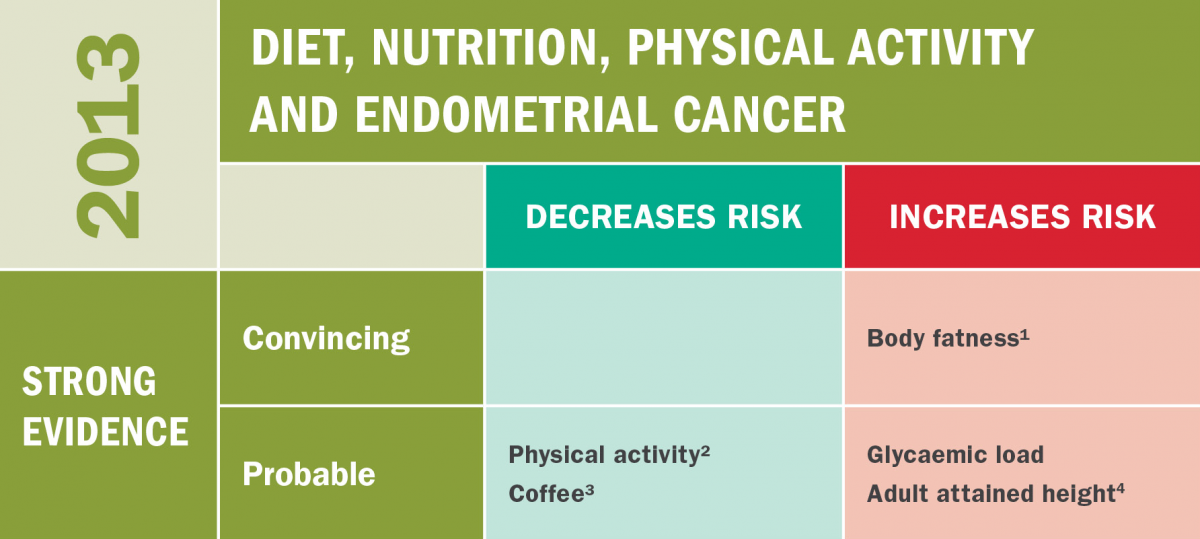
Food, Nutrition, Physical Activity, And Cancer of The Endometrium | ||
|---|---|---|
| Source: AICR/WCRF Continuous Update Project Report: Endometrial Cancer, September 2013 | ||
| STRENGTH OF CURRENT EVIDENCE | DECREASES RISK | INCREASES RISK |
| CONVINCING Effect on Risk: |
Body fatness |
|
| PROBABLE Effect on Risk: |
Coffee Physical activity |
Glycemic load |
- Excess Body Fat RAISES Endometrial Cancer Risk
- Being overweight and obese increases blood levels of insulin and related hormones that can encourage the growth of cancer.
- Excess fat also creates a pro-inflammatory environment in the body that can contribute to the growth of cancer.
- Diets With a High Glycemic Load RAISE Endometrial Cancer Risk
- Glycemic load is a measure of how much a food increases your blood sugar.
- A diet high in glycemic load can lead to high blood sugar, which can increase insulin levels. Over time, high insulin levels make it easier for cancer cells to grow.
- Physical Activity LOWERS Endometrial Cancer Risk – Both Directly and Indirectly
- DIRECTLY: Being active helps regulate hormone levels and reduces inflammation.
- INDIRECTLY: Active people are less likely to be overweight or obese; as noted above, excess body fat raises risk for endometrial cancer – and six other kinds of cancer as well.
- Coffee LOWERS Endometrial Cancer Risk
- In laboratory studies some coffee components, including chlorogenic acid, have displayed strong antioxidant properties that may prevent DNA damage, improve insulin sensitivity and inhibit glucose absorption in the intestine, all of which may reduce risk.

About The CUP
The AICR/WCRF Continuous Update Project (CUP) is the world's largest ongoing cancer prevention research project. It is a living database of the global scientific evidence on diet, physical activity, body weight, and cancer.
AICR-Supported Studies
| 06A131: | Effects of Folate and the Folate Receptor on Ovarian and Endometrial Cancer: an In Vitro Study |
LOOK FORWARD WITH HOPE
Today, your chances for overcoming endometrial cancer and returning to an active and full live are the best they've ever been.
But throughout your treatment, and after its over, you will face many everyday questions. AICR can help.
AICR’s CancerResource: A Program for Those Living with Cancer is a free kit of information specifically for the newly diagnosed cancer patient.
YOU ARE NOT ALONE
There are now over 500,000 endometrial cancer survivors in the US alone, living longer, healthier lives than ever before.
See below for selections from AICR's CancerResource. Or read the complete CancerResource flipping book online.
BEFORE TREATMENT
DURING TREATMENT
- Questions to Ask Your Oncologist About Your Treatment Worksheet
- Questions to Ask About Nutrition During Treatment
- Evidence-based advice on managing nutrition-related side effects of treatment
- Staying active during treatment
AFTER TREATMENT
- AICR’s Recommendations for Cancer Prevention
- Healthy or Harmful? Frequently Asked Questions about Life After Cancer
More AICR Materials for Sitename Cancer Survivors
In-depth brochures on cancer survivorship; read online or order a free copy.

Join the Fight Against Endometrial Cancer
Endometrial cancer is the most common cancer of the female reproductive system, yet the choices we make every day could prevent three out of every five cases each year.
Your support for AICR's cancer research, survivorship, and education programs will help us get one step closer to preventing endometrial cancer and saving lives.
Your gift will help fund emerging research on endometrial cancer and other cancers and improve the quality of health for endometrial cancer patients and survivors.
Honor Someone Facing Endometrial Cancer
Make a gift in memory of a loved one. Your gift will help fund research and survivorship programs for those with endometrial cancer and other cancers for years to come.
Give in Memory of a Loved One Your gift will help fund research and survivorship programs for those with endometrial cancer and other cancers for years to come.
Do You Have a Question? Ask the Expert!
We’ve compiled a list of some of the most common questions we receive in our FAQ below. Have a question about diet and food and cancer prevention? Ask your question using this form. We will post some of the answers to the questions we receive that have the most benefit to the most people.
Ask Your Question
Frequently Asked Questions (FAQ)