




Alice RD
Today, the World Health Organization’s International Agency for Research on Cancer (IARC) named processed meat as a carcinogen. AICR has included avoiding processed meat as one of our recommendations for cancer prevention since 2007. Processed meat (and high amounts of red meat) increase risk for colorectal cancer.
Here’s our statement on the WHO report.
Both organizations found that for processed meat, even small amounts eaten daily – 50 grams or 1 small hot dog – increases risk for colorectal cancer by 18% compared to eating none.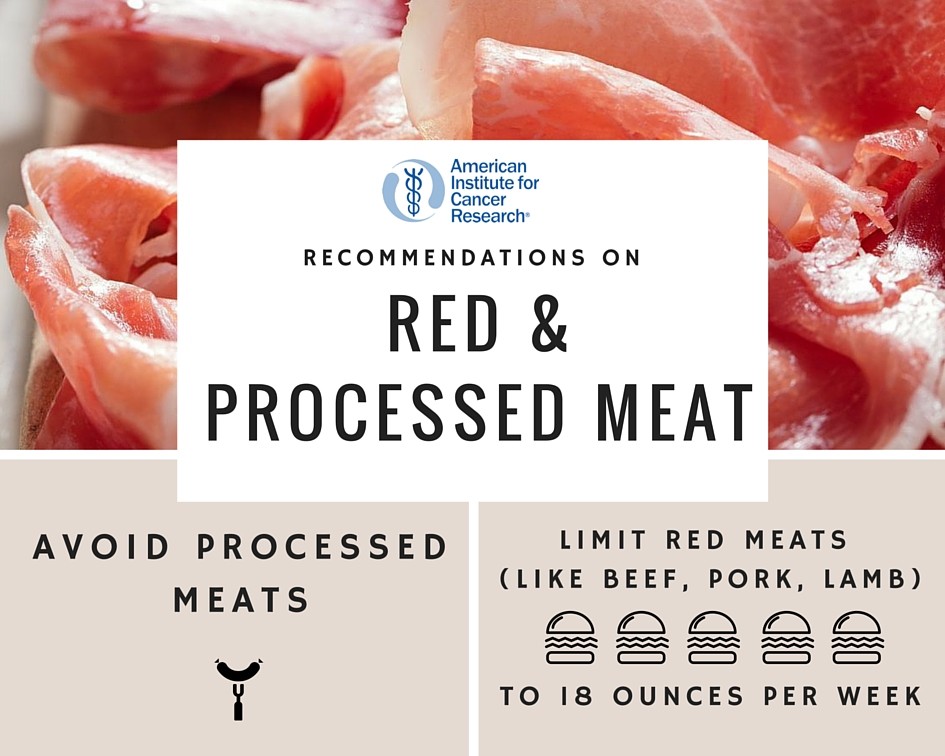
So what exactly is “processed meat”?
AICR defines processed meat as:
“meat preserved by smoking, curing or salting, or addition of chemical preservatives.” Ham, bacon, pastrami, sausages, hot dogs and cold cuts are all considered processed meat.
IARC’s definition:
“meat that has been transformed through salting, curing, fermentation, smoking, or other processing to enhance flavor or improve preservation. Most processed meats contain pork or beef, but processed meat may also contain other red meats and poultry”

Grilling burgers and hot dogs
It’s not yet clear exactly why these meats increase risk for colorectal cancer. It may be the added nitrites and nitrates, the smoking and/or high temperatures used in some processing, or the heme iron in red meat.
Does this include nitrate and nitrite free meats and sausage? These products are relatively new, so we need more studies that make these distinctions.
So, for now, save processed meats for special occasions and choose fresh meats most of the time. Here are some ideas to lower your cancer risk:
- Replace deli meats and cold cuts with fresh chicken or fish
- Instead of bacon, chorizo or salami, try spicy vegetarian sausages.
- Replace sausage in chili and soups with beans like kidney beans, chickpeas and lentils.
- Try out different sources of protein like eggs, cottage cheese, tofu and hummus
IARC has also listed red meat as a probable carcinogen. AICR’s recommendation for red meat is to keep your red meat to less than 18 ounces (cooked) per week. That’s about 4 hamburgers (quarter-pounders) weekly.
For more on how to lower risk for colorectal cancer see the latest from the AICR/WCRF expert report.
Visit AICR Healthy Recipes for delicious recipes for chicken, fish, beef and pork.