



Research Type: Multiple Sites Cancer
Project Description
“Starting Knockout Cancer to bring cardio boxing to immunotherapy patients is an exciting first step to improving quality of life for those experiencing the side effects of brain fog. Thanks to the support from the American Institute for Cancer Research, our project will determine the benefits of boxing in immunotherapy patients, and we hope to eventually scale our program and help more patients.”
-Tiphanie Raffegeau
Background:
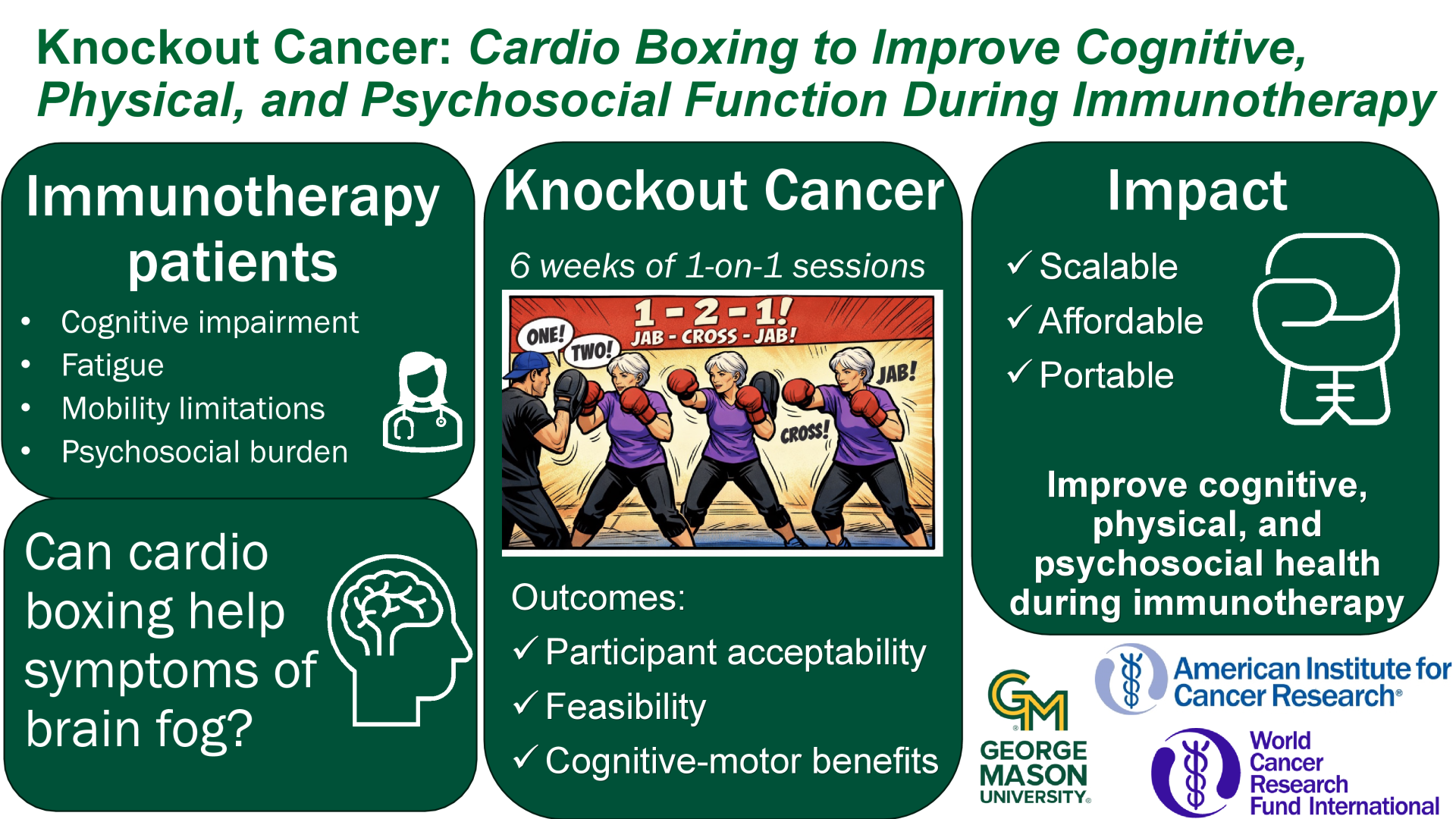
Many people living with cancer describe “brain fog” during or after treatment. This can include trouble focusing, forgetfulness, slower thinking, and less confidence in everyday tasks. Older adults may be especially affected. Treatments that help the immune system fight cancer have improved survival, but they may also add to these thinking problems. Exercise is known to help people with cancer feel and function better, but few studies have tested exercise programs designed specifically to help brain fog in older adults receiving these treatments.
Aims and Objectives:
We believe that a supervised cardio boxing program can be a safe, acceptable, and practical way to support older adults with cancer-related brain fog. We also expect that people assigned to cardio boxing will show early signs of improvement in self-reported brain fog compared with people assigned to an education-only comparison group. The main goals are to learn whether people can be recruited and kept in the study, whether they can attend sessions, whether the program can be delivered safely, and whether the study measures are useful for a larger future trial. We will also look for early signs of change in thinking, walking, and physical function.
Methods:
This 12-month study will be carried out through a partnership between George Mason University and Inova Schar Cancer Institute. We will enroll 30 adults aged 60 years and older who have solid cancers, self-reported symptoms of brain fog, have currently or recently received immunotherapy, and are between 3 months and 5 years past their main active treatment, such as surgery and/or chemotherapy. Participants will be assigned by chance to one of two groups. The first group will complete a 6-week cardio boxing program with two supervised, in-person sessions each week. Sessions will be individual, about 45 minutes long, and delivered on site at Inova to match each person’s abilities and symptoms. The other group will receive weekly phone check-ins and brain fog education using existing Peterson Life with Cancer resources. Everyone will complete questionnaires and simple tests before and after the 6-week study period. We expect about 24 participants to complete the main study assessment. People in the education group will be offered the boxing program after the main study assessment is finished.
Potential Impact:
In the short term, this study will show whether this kind of program can realistically be offered in cancer care and will help improve the plan for a larger trial. In the long term, the findings could support a new, low-cost care option to help older adults manage brain fog, stay active and be independent during and after cancer treatment.
Scientific Novelty:
This study is new because it focuses on older adults, centers on the symptom patients call brain fog, tests an exercise approach that combines movement with attention, coordination, and quick responses, and is designed to fit within real-world cancer care.
