


Project Description
“Funding for the Beneficial Omega-3 Supplementation for Oncological Mitigation (BOSOM) trial provides the opportunity to not only understand the biology of how the lack of breastfeeding impacts breast cancer risk but developing interventions to reduce the risk of breast cancer in women who cannot or chose not to breastfeed. We are so grateful for this funding to push the understanding of women’s health and work to reduce the risk of breast cancer in premenopausal women.”
-Dr. Kate Ormiston
Background:
Large studies have shown that women who do not breastfeed after full-term pregnancy have increased risk of breast cancer. The breast tissue changes during pregnancy to prepare for breastfeeding and later reverts to look more like the pre-pregnancy breast tissue. Abrupt stopping of breastfeeding or lack of breastfeeding after full-term pregnancy leads to abrupt involution (AbI) and is suggested as a cause of increased breast cancer risk. Scientists have shown that mice that experience AbI have pre-cancerous changes within the breast tissue. Dietary interventions represent an opportunity to prevent the effects of AbI on increased breast cancer risk. Omega-3 fatty acids have been studied for their role in reducing the risk of breast cancer in high-risk women and reducing the risk of reoccurrence in people living with breast cancer.
Aims and Objectives:
The main objective of this study is to determine the impact of omega-3 fatty acids (EPA and DHA) on their ability to decrease the negative effects of AbI in the gland used to produce milk (mammary gland) related to hormone (estrogen) signaling. The secondary objective is to understand how the effects of EPA and DHA on estrogen signaling during AbI influence metabolic outcomes related to breast cancer risk.
Methods:
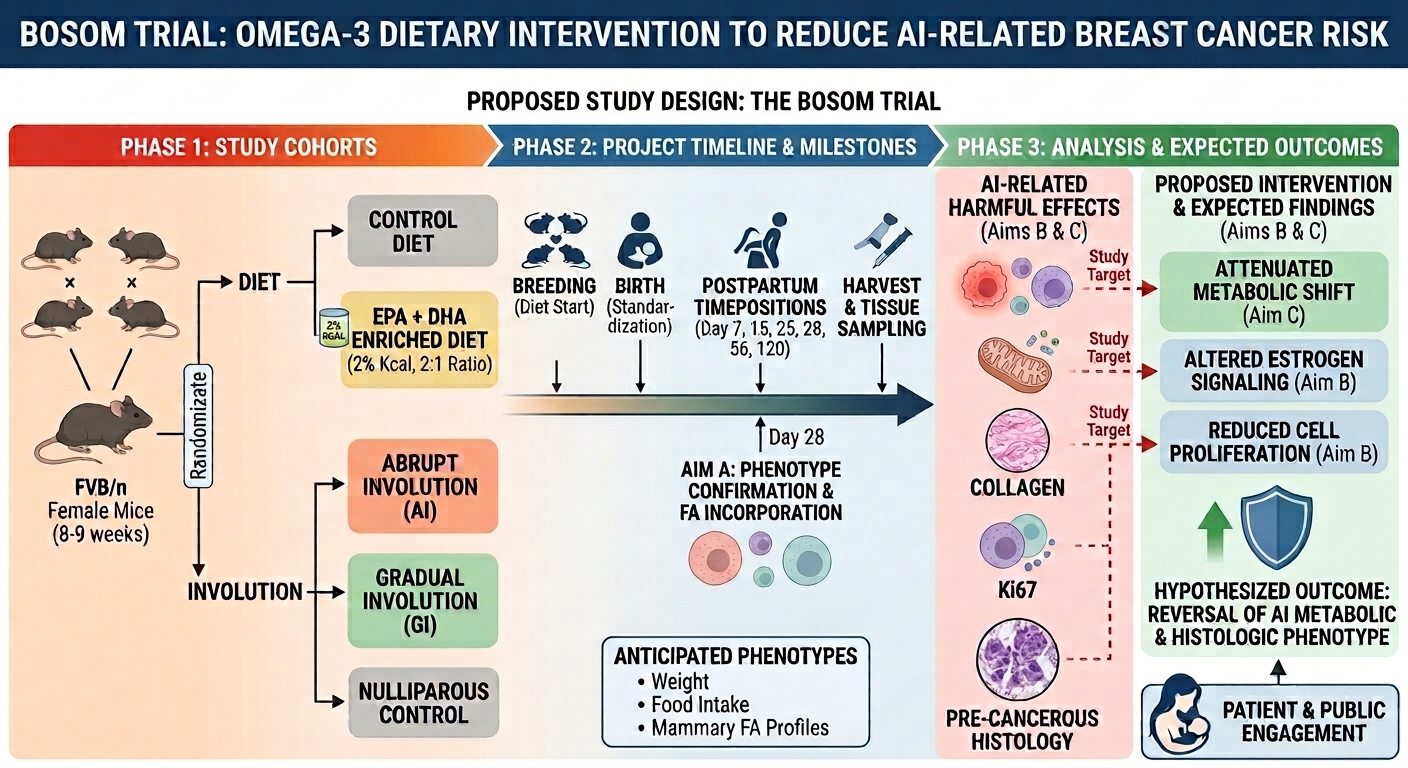
The researchers will use mice to mimic the experience of a pregnant person following either a standard diet or a diet enriched with EPA/DHA (i.e. prenatal supplements). Half will experience AbI and half will experience gradual involution. Body weight, food intake, mammary gland changes, and metabolic changes will all be looked at between groups.
Potential Impact:
This study will help scientists better understand the biology of the mammary gland and give a clearer picture on how diet can be used to minimize cancer risk. It may also lead to greater support for breastfeeding supportive policies and infrastructure. Ultimately, this work has the opportunity to rethink postpartum health for women and help to reduce risk of breast cancer in young, pre-menopausal women.
Scientific Novelty:
This study would be the first of its kind to examine a dietary intervention with the impacts of the lack of breastfeeding following full-term pregnancy.