




Samantha
Last month we wrote about how plant scientists are developing these colorful new varieties of vegetables that contain different cancer-preventing phytochemicals.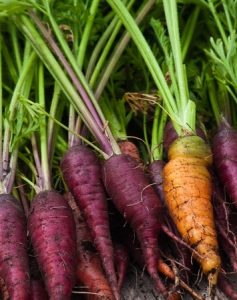
For the article, I spoke with Philip Simon, PhD from the University of Wisconsin who first introduced the anthocyanin-packed purple carrot in 1992. One of the best things I learned from my talk with Dr. Simon is that with a little bit of time and patience we can recreate the process at home! This can be a great activity for kids and adults alike.
The first step in the plant breeding process is to get the vegetables to flower. For most vegetables such as peppers or squash, flowers are the norm (think, stuffed squash blossoms). For carrots and other root vegetables, flowering is a bit more involved. They only flower after being exposed to cold. So, here’s what you do:
Step 1: Buy a bunch of carrots with the green tops on; chose both purple and orange.
Step 2: Cut off the tops of the greens leaving about an inch of green stem
Step 3: Dry on the counter until no surface moisture remains to prevent mold growth
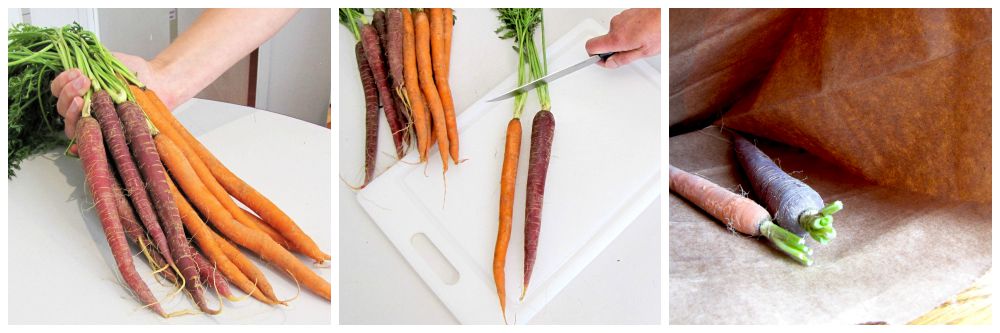
Steps 1, 2, 3: cut off carrot tops and allow to dry
Step 4: Put carrots in the fridge for 6 weeks in a loosely sealed brown paper bag.
Step 5: Remove from fridge and plant carrots in a pot.
Step 6: In a few weeks, carrots will grow green leaves and then flowers that you may recognize as Queen Anne’s Lace.
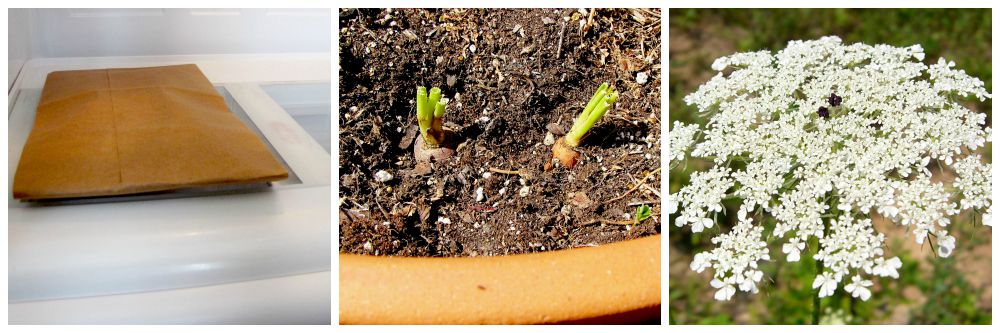
Steps 4, 5, 6: refrigerate, plant and grow!
Step 7: Cross-pollinate. This means moving the pollen from the flower of one plant to another. In nature, flies and bees are responsible for this important job. In your home, you can use a paintbrush!
Use a small clean brush to move pollen from the center of the flowers of one plant to another and vice versa. After 4 to 6 weeks the flowers containing the developing seeds will turn brown.
Step 8: Harvest flowers and place in paper bags so they can dry completely, about a couple days.
Step 9: Rub dried seeds to remove spines and they are ready for planting.
Step 10: Plant! When you plant the seeds, some of the carrots may look like the beta-carotene packed orange “parent”, some like the anthocyanin-rich purple “parent” and some will have DNA and nutrients from both, just like what happens in Dr. Simon’s lab.
We at AICR are in the middle of our carrot experiment and can’t wait to see the results. Comment below to tell us about how your experiment turns out!